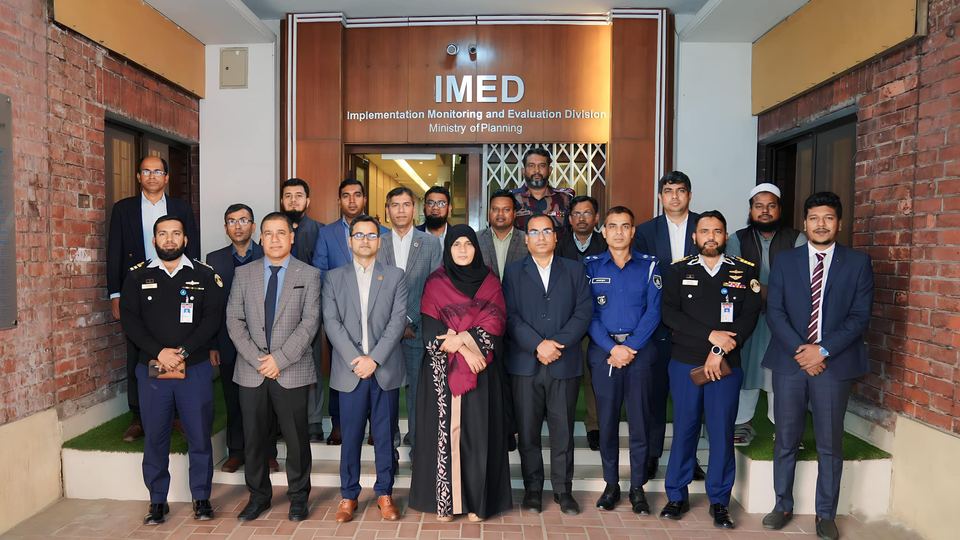
A Landmark Initiative to Strengthen Project Execution
The "Capacity Enhancement for Effective Practice of Result Based Monitoring and Evaluation System in IMED-CEEPRM&ESI (1st Revised) Project" is a critical initiative by the Implementation Monitoring and Evaluation Division (IMED) of the Ministry of Planning. Its goal is to enhance the capacity of government officials across various ministries to manage development projects more effectively, a key step towards achieving national goals like Vision 2041.
A central deliverable of this project, for which my company Management and Training International Ltd. (MTI Ltd.) was a key partner, was the development of a comprehensive, 159-page Training Module. As noted in its preface by the Secretary of IMED, this guidebook is "the first of its type in Bangladesh in many ways," designed to bridge the gap between international project management standards and the realities of Bangladesh's public sector.
The Three Pillars of the Training Module
The training module is a self-sufficient educational resource meticulously structured to equip Project Directors, Deputy Project Directors, and other officers with essential skills. It is built on three core pillars:
- Project Management: Covering the entire project lifecycle from identification, formulation (including DPP), planning, and appraisal to implementation and risk mitigation.
- Results-Based Monitoring & Evaluation (RBME): A deep dive into modern M&E concepts, including Theory of Change (ToC), logical frameworks, and performance measurement to ensure projects deliver tangible outcomes.
- e-PMIS Application: Practical, hands-on guidance for using the government's Electronic Project Management Information System (e-PMIS) for real-time monitoring, reporting, and data management.
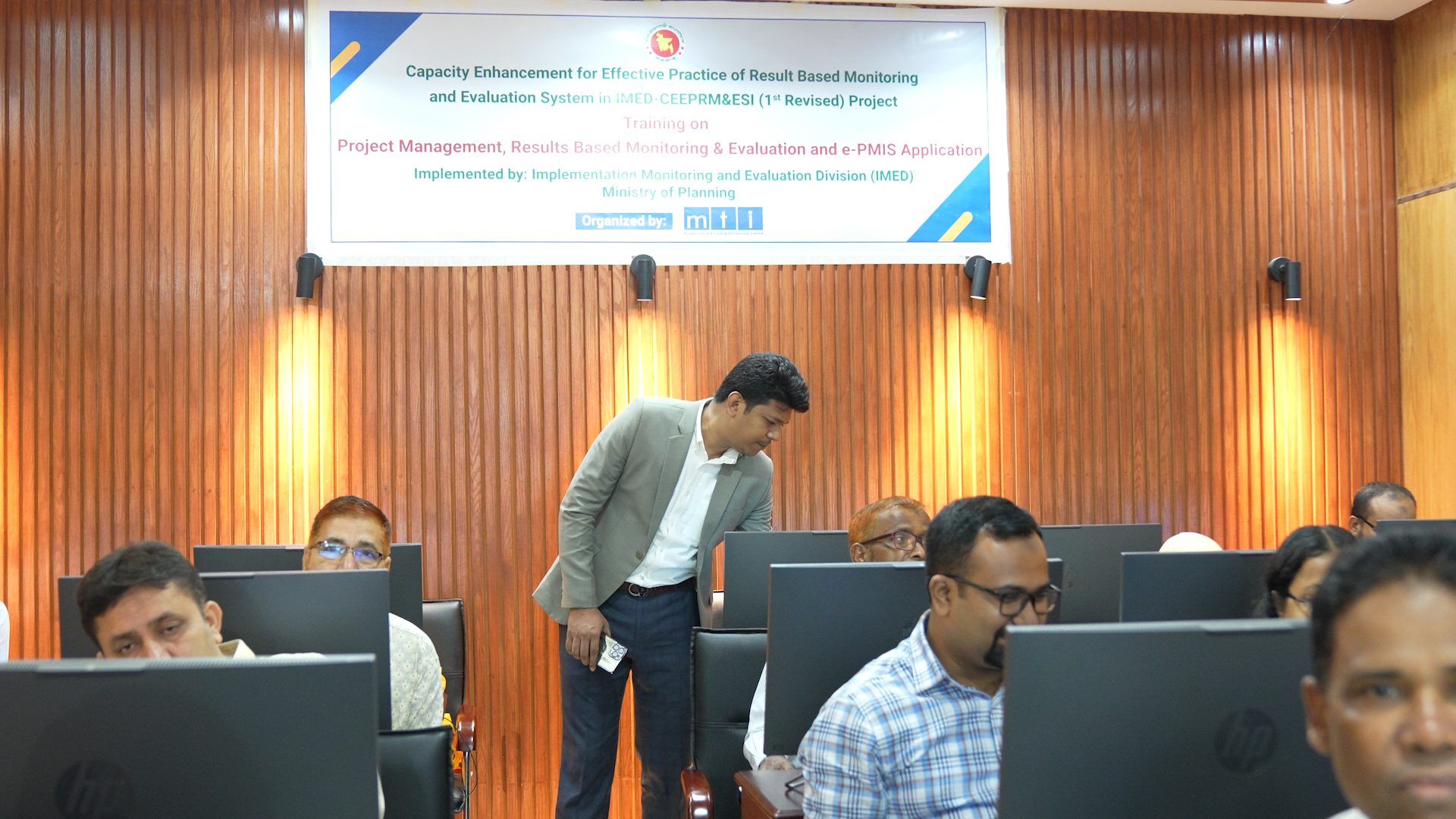
A training session where the principles from the module are taught to government officials.
My Role and Key Contributions
As a core member of the project team, I was deeply involved in the creation of this vital training module. My responsibilities were multifaceted, combining technical expertise with strategic coordination to ensure the final product was both comprehensive and practical.
- Module Development and System Design: I was responsible for designing the structure of key sections of the module. This involved breaking down complex topics like Project Cycle, Logical Frameworks, and RBME into digestible sessions and learning objectives, ensuring a logical flow from theory to practical application.
- Content Management of e-PMIS: I took the lead on developing the content for the "e-PMIS: Basic Concept & its application" section. This required an in-depth analysis of the national e-PMIS portal to create clear, step-by-step user guides, tutorials, and best practices for data security, reporting, and workflow integration. My goal was to demystify the technology and empower officials to use the system to its full potential.
- Program Coordination: I served as a key coordinator, liaising between subject matter experts, IMED officials, and the MTI team. This included organizing workshops to gather content, facilitating review sessions, and ensuring that feedback from senior officials was systematically incorporated into the module's revisions.
Project Impact
The final Training Module stands as a testament to a successful collaboration aimed at institutionalizing best practices in public project management. By providing a standardized, high-quality resource, the project equips thousands of public officials with the tools needed to improve project outcomes, enhance organizational efficiency, and ensure greater accountability. It was a privilege to contribute significantly to a foundational document that will shape the execution of development projects in Bangladesh for years to come.
Interested in my work?
Explore more projects or get in touch to discuss collaborations in project management, system analysis, and training development.
Contact Me